
Discover high-performance polyester filament with superior strength, UV stability, and recyclability. Our factory in China supplies B2B buyers, wholesalers, and manufacturers worldwide with certified polyester filament for apparel, home textiles, and industrial fabrics.
Polyester filament has become the backbone of the modern textile industry. As a continuous synthetic fiber derived primarily from PET (polyethylene terephthalate), it offers unparalleled consistency, durability, and versatility across apparel, home textiles, and industrial fabrics. For B2B buyers, manufacturers, and suppliers, understanding the science, performance metrics, and commercial implications of polyester filament is essential for smarter sourcing and product development.
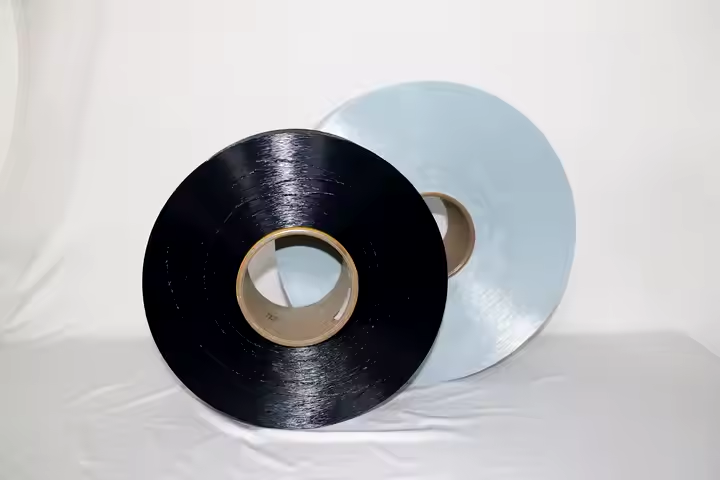
1. What Is Polyester Filament and How Is It Made?
Polyester filament is produced through melt spinning of PET chips, followed by drawing, orientation, and texturizing. The manufacturing chain includes:
-
Polymerization: TPA and MEG condensation forms PET with molecular weights suitable for fiber spinning.
-
Melt spinning: Molten polymer is extruded through spinnerets to form filaments of precise denier.
-
Drawing & orientation: Aligns molecular chains, enhancing tensile strength and dimensional stability.
-
Texturizing: Processes like air-jet or false-twist create bulk and elasticity, improving comfort and hand feel.
2. Key Properties and Technical Parameters
Polyester filament performance is defined by measurable parameters:
| Property | Typical Range | Relevance |
|---|---|---|
| Tenacity | 4–12 g/den | Determines strength, abrasion resistance |
| Elongation at Break | 20–30% | Influences elasticity, comfort |
| Moisture Regain | ~0.4% | Explains quick-dry and low absorbency |
| Thermal Resistance | Up to 250 °C | Dyeing, heat-setting, industrial processes |
| Lightfastness | Grade 4–5 | Ensures color stability for outdoor/UV exposure |
3. Industrial and Commercial Applications
-
Apparel: Sportswear, activewear, lingerie, and fashion fabrics demanding durability with low maintenance.
-
Home Textiles: Upholstery, curtains, carpets, known for easy care and vibrant dye uptake.
-
Technical Textiles: Automotive interiors, seatbelts, conveyor belts, filtration fabrics where safety and performance are critical.
-
Sustainability Trends: rPET (recycled polyester filament) is becoming mainstream in eco-conscious sourcing contracts.
4. Expert Insights
Expert View 1 — Performance in Outdoor Use
“For outdoor fabrics, we specify polyester filament with UV-stabilized coatings. Without it, tensile strength loss after 1,000 hours of exposure can exceed 15%. With proper stabilization, that figure drops below 5%.”
— Dr. Elaine Roberts, Textile Engineer, Technical Fabrics Lab
Expert View 2 — Recycled Polyester Adoption
“rPET filament is not a downgrade anymore. Advanced recycling ensures mechanical properties nearly match virgin PET, making it viable for high-end apparel and automotive applications.”
— Prof. Zhang Wei, Materials Science, Tsinghua University
Expert View 3 — B2B Buyer’s Checklist
“When sourcing polyester filament, request denier/tex uniformity data, tensile test results, and OEKO-TEX or GRS certification. These parameters directly influence product quality and buyer confidence.”
— Maria Gonzalez, Senior Sourcing Manager, Global Apparel Group
5. Polyester Filament vs Other Fibers
-
Vs Cotton: Superior wrinkle resistance, durability, and quick drying, but lower breathability.
-
Vs Nylon: Better chemical resistance and dimensional stability, though nylon may outperform in abrasion resistance.
-
Vs Bio-based fibers (PLA, lyocell): Polyester offers stronger industrial supply chains and lower costs, though bio-fibers score higher in biodegradability.
6. B2B Buying and Quality Control
-
Define Applications: Apparel vs technical textiles require different specs.
-
Check Specifications: Denier, filament cross-section, strength, elongation, UV/thermal performance.
-
Test Samples: Wash tests, accelerated weathering, dye fastness, and shrinkage control.
-
Certifications: OEKO-TEX Standard 100, GRS (Global Recycled Standard), ISO 9001 for process quality.
-
Supply Chain Transparency: Ask about polymer origin, recycling practices, and ESG compliance.
7. FAQs
Q1: Is all polyester filament recyclable?
Not entirely. Pure PET filament is recyclable, but blends or heavily dyed filaments may reduce recyclability efficiency.
Q2: How does polyester filament perform in high-temperature processing?
It withstands dyeing up to 130 °C under pressure. Beyond 250 °C, thermal degradation begins.
Q3: What is the advantage of using filament vs staple fiber?
Filament provides uniform strength and continuous structure, ideal for performance fabrics, whereas staple is softer but less dimensionally stable.
8. Environmental Impact and Future Outlook
-
rPET filament demand is projected to grow >10% CAGR globally (2025–2030).
-
Anti-microplastic technologies and bio-based copolyesters are under development.
-
Brands are adopting polyester filament in circular economy models, balancing cost, durability, and sustainability.
Conclusion
Polyester filament is more than just a commodity fiber. Its science-backed performance, industrial adaptability, and sustainable innovations position it as a cornerstone for B2B textile sourcing and manufacturing. With expert insights, measurable metrics, and clear quality benchmarks, companies can make informed decisions that secure both performance and profitability.
Reference
European Commission (2024). Sustainable Fibres in Global Trade: Polyester, Cotton, and Beyond. Brussels: Directorate-General for Internal Market, Industry, Entrepreneurship and SMEs.
Previous News
What color bag goes well with everythingNext News
2025Guide Recycled Polyester: Weave a Sustainab...